

Things to Consider Before Choosing a Vehicle Transport Carrier
Home / Things to Consider Before Choosing a Vehicle Transport Carrier
Choosing a vehicle transport carrier is about more than just finding the lowest price. Your vehicle is a valuable asset, and trusting the right company can save you time, money, and unnecessary stress. Whether you are relocating, purchasing a vehicle online, or arranging transportation for business purposes, knowing what to look for can help you make the right decision.
1. Verify Licensing and Registration
Before booking any vehicle shipment, confirm that the carrier is properly licensed and registered with the Federal Motor Carrier Safety Administration (FMCSA). Legitimate auto transport carriers should have an active USDOT number and MC number.
This step helps ensure the company is legally authorized to transport vehicles across state lines and operate within federal regulations.
Pro Tip: Ask for the carrier’s DOT and MC numbers before booking and verify them independently.
2. Confirm Insurance Coverage
Insurance is one of the most important factors when choosing a vehicle transport company. Never assume your vehicle is automatically fully protected.
Request proof of cargo insurance and review the following:
Coverage limits
Policy effective dates
Vehicle types covered
Any exclusions that may apply
Proper insurance coverage can protect you in the rare event that damage occurs during transport.
3. Research Reviews and Reputation
Customer feedback can reveal a lot about a transport company’s professionalism and reliability.
Look for reviews on:
Google
Better Business Bureau
Transport review platforms
Social media business pages
Pay attention to recurring complaints involving delayed pickups, poor communication, hidden fees, or unresolved damage claims.
A company’s reputation often tells you more than their quote.
4. Understand Open vs. Enclosed Transport
Different vehicles require different shipping solutions.
Open Transport is the most common and cost-effective option. It works well for standard vehicles and generally offers faster availability.
Enclosed Transport provides extra protection from weather and road debris, making it ideal for luxury, exotic, classic, or high-value vehicles.
Choosing the right transport method ensures the right balance between cost and protection.
5. Be Cautious with Extremely Low Quotes
A significantly lower quote may seem attractive, but it can sometimes lead to problems.
Unusually cheap pricing may result in:
Hidden fees
Delayed pickup scheduling
Carrier cancellations
Limited communication
Lower service quality
In vehicle transport, realistic pricing often leads to smoother service and fewer surprises.
6. Ask About Pickup and Delivery Timeframes
Vehicle shipping timelines are estimates, not guaranteed appointment windows like standard package delivery.
Before booking, ask:
Estimated pickup timeframe
Estimated delivery timeframe
Door-to-door availability
Any possible delays based on route demand
Clear expectations help prevent misunderstandings.
7. Evaluate Communication and Customer Service
Strong communication is one of the clearest signs of a professional transport company.
Look for providers who:
Respond promptly
Answer questions clearly
Explain the process honestly
Provide real contact information
Keep you updated throughout the shipment
Poor communication early in the process can be a warning sign.
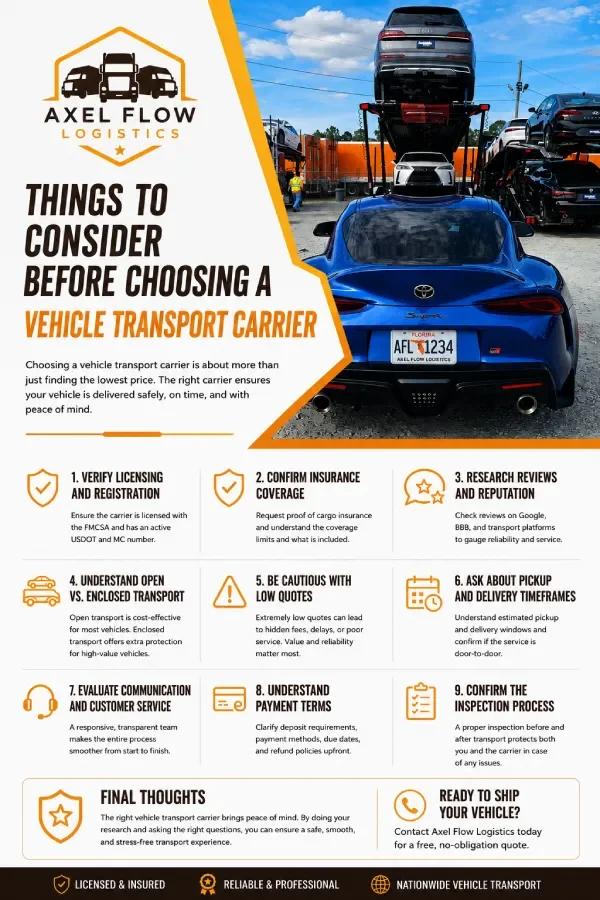
Vehicle transport carrier checklist infographic by Axel Flow Logistics showing key factors to consider before choosing an auto transport company.
8. Understand Payment Terms
Always clarify payment expectations before committing.
Important questions include:
Is a deposit required?
When is the remaining balance due?
What payment methods are accepted?
Is the deposit refundable?
Transparent payment terms help you avoid unnecessary surprises.
9. Confirm the Inspection Process
A professional carrier should perform a vehicle inspection before pickup and again at delivery using a Bill of Lading.
This inspection should document:
Existing scratches
Dents
Vehicle condition
Mileage (when applicable)
Taking photos before transport is also highly recommended.
This documentation helps protect everyone involved if a claim becomes necessary.
Final Thoughts
Choosing the right vehicle transport carrier is about trust, protection, and reliability—not just price.
Taking time to verify licensing, insurance, reviews, communication, and payment terms can make the entire shipping experience smoother and far less stressful.
If you are looking for dependable vehicle transportation with transparent communication and professional service, working with an experienced logistics partner can make all the difference.