
How to Ship an SUV or Pickup Truck
Shipping an SUV or pickup truck works much like shipping a regular car, but larger vehicles require additional planning. Their size, weight, height, and modifications can affect the price, the type of trailer needed, and carrier availability.
Whether you are relocating, buying a vehicle from another state, or sending a truck to a family member, knowing what to expect can make the process much easier.
Why SUVs and Pickup Trucks May Cost More to Ship
Auto transport prices are based on more than mileage. Every carrier has limited trailer space and weight capacity. A large SUV or heavy-duty pickup occupies more space and adds more weight than a standard sedan.
Several factors may affect your shipping price:
The vehicle’s length, width, height, and weight
The distance between pickup and delivery
Current carrier availability on the route
Fuel prices and seasonal demand
The condition of the vehicle
Open or enclosed transportation
Lift kits, oversized tires, toolboxes, roof racks, or camper shells
A narrow or urgent pickup window
A compact SUV may be priced similarly to a sedan, while a crew-cab pickup, dually, or lifted truck may require a higher rate.
Provide Accurate Vehicle Information
The most important step is providing the correct vehicle information when requesting your quote.
You should include:
The exact year, make, and model
Pickup and delivery ZIP codes
Your preferred pickup dates
Whether the vehicle runs, steers, brakes, and rolls
Whether the vehicle has been modified
Whether you prefer open or enclosed transport
Be especially careful when describing pickup trucks. A standard pickup and a crew-cab dually have very different dimensions and transportation requirements.
If the vehicle has a lift kit, oversized tires, a roof rack, a toolbox, a camper shell, or another modification, tell your transport coordinator before the vehicle is assigned to a carrier. Photos can also help confirm its dimensions and condition.
Choose Open or Enclosed Transport
Open Transport
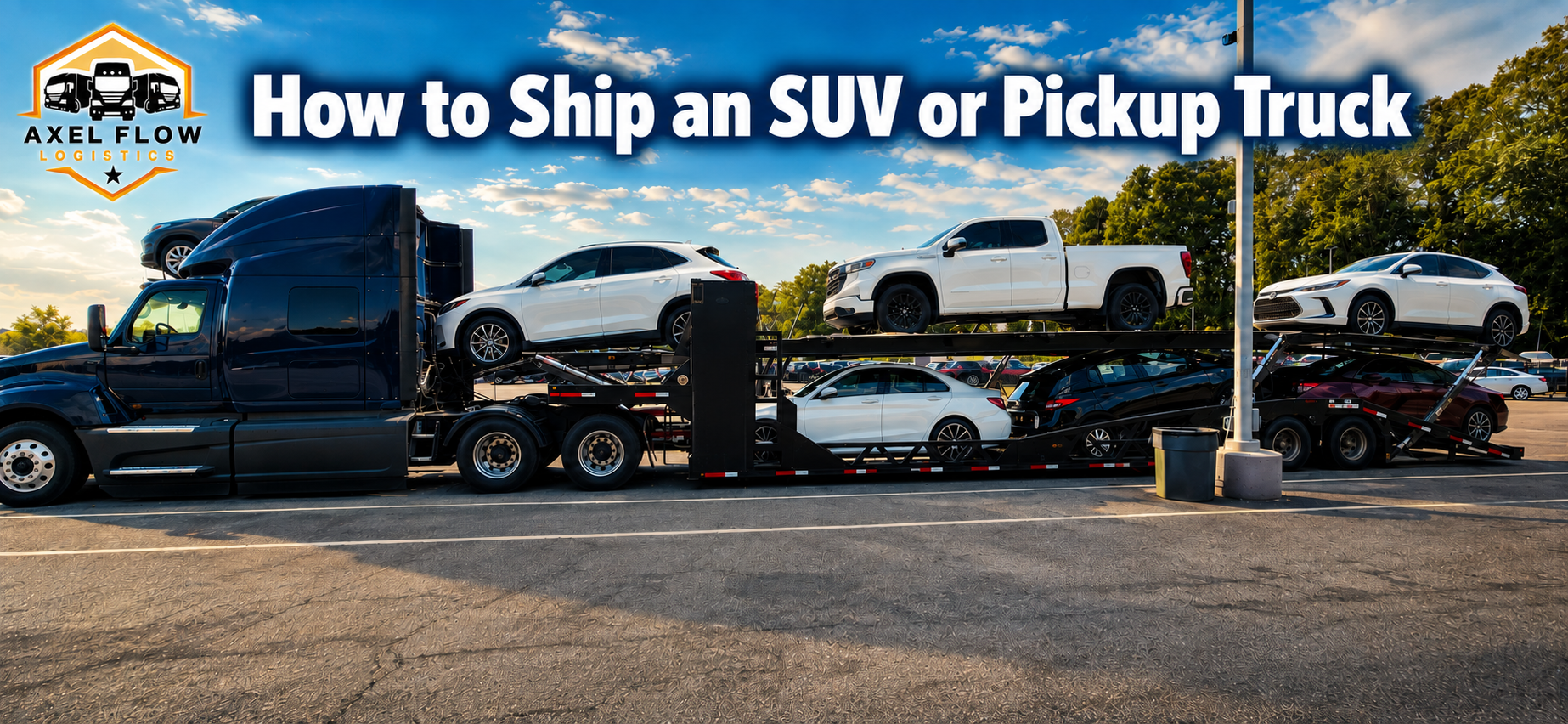
Open transport is the most common and economical option for shipping SUVs and pickup trucks. These are the trailers most people see transporting multiple vehicles on the highway.
The vehicle will be exposed to normal weather and road conditions during transportation, but open transport is suitable for most everyday SUVs and trucks.
Enclosed Transport
Enclosed transport provides additional protection from weather and road debris. It may be worth considering for:
Classic vehicles
Luxury SUVs
Restored pickup trucks
Rare or collectible vehicles
High-value vehicles
Enclosed transportation generally costs more because fewer carriers provide the service and each trailer carries fewer vehicles.
Very tall or heavily modified vehicles may also require specialized equipment, so their dimensions should be confirmed in advance.
How to Prepare Your SUV or Pickup Truck
Before the carrier arrives, take the following steps:
Remove Personal Items
Remove valuables, loose electronics, household goods, tools, and anything else that could move during transportation.
Personal-property rules vary between carriers, and additional weight can affect whether the vehicle can be accepted. Always ask before placing anything inside the vehicle.
Secure Accessories
Retract or remove antennas and secure any loose exterior accessories.
For pickup trucks, make sure that:
Toolboxes are locked and properly attached
Tonneau covers are securely fastened
Camper shells are properly installed
Nothing loose remains in the truck bed
Removable roof-rack components are taken off or secured
Reduce the Fuel Level
Keep approximately one-quarter tank of fuel in the vehicle. That is usually enough for loading and unloading without adding unnecessary weight.
Check for Mechanical Problems
Tell your transport coordinator about leaks, weak batteries, steering problems, brake issues, low ground clearance, or anything else that could affect loading.
If the vehicle does not run, make sure this is disclosed before a carrier is assigned. Inoperable vehicles may require a winch or other specialized equipment.
Clean and Photograph the Vehicle
A basic wash makes existing scratches, dents, and other damage easier to identify.
Before pickup, take clear photos of:
The front and rear
Both sides
The wheels
The roof when practical
The interior
Any existing damage
Keep the photos until the vehicle has been delivered and inspected.
Disable Alarms and Toll Devices
Turn off the vehicle’s alarm system and remove or deactivate electronic toll passes to prevent unwanted charges or interruptions during transport.
Prepare the Keys
The driver will need a working key or key fob for the ignition and doors.
What Happens at Pickup?
The driver will inspect the vehicle and record its visible condition on the bill of lading.
Review the inspection carefully before signing it and keep a copy for your records. After the inspection, the vehicle will be loaded and secured based on its size, weight, and position on the trailer.
Large car carriers may not be able to enter narrow residential streets, neighborhoods with low tree branches, steep driveways, or areas with truck restrictions.
If your location is not safely accessible, the driver may ask to meet at a nearby shopping center, wide parking lot, or another safe location. This helps protect the vehicle, the carrier, and the surrounding property.
What to Expect During Transportation
Pickup and delivery times are normally provided as estimates. Weather, traffic, mechanical problems, loading schedules, and federal driving-hour limits can affect the driver’s progress.
Keep your phone available during transportation and make sure the pickup and delivery contacts can communicate with the driver.
Inspect the Vehicle at Delivery
Before signing the final bill of lading, inspect the SUV or pickup truck carefully.
Compare its condition with:
Your pickup photos
The original inspection
The pickup bill of lading
If you notice new damage, document it on the bill of lading before the driver leaves. Take clear photos of the affected area and keep copies of all transportation documents.
Common Mistakes to Avoid
Avoid these common SUV and pickup truck shipping mistakes:
Listing a lifted or modified truck as a standard vehicle
Providing an approximate model instead of the exact body style
Waiting until pickup day to disclose that the vehicle is inoperable
Leaving loose equipment or valuables inside the vehicle
Assuming a large carrier can access a narrow street or steep driveway
Signing the delivery inspection before checking the vehicle
Selecting a quote without confirming what the price includes
Frequently Asked Questions
Can a Lifted Pickup Truck Be Shipped?
Yes, many lifted trucks can be transported. However, the total height, tire size, ground clearance, and exact modifications must be provided before assigning a carrier.
Does a Dually Cost More Than a Regular Pickup?
Usually, yes. A dually is wider and heavier than a standard pickup, which limits its possible positions on the trailer and reduces the number of carriers that can transport it.
Can I Leave Items in the Truck Bed or Cargo Area?
Loose or valuable items should be removed. Personal-property allowances vary by carrier, and additional weight can create safety or acceptance issues. Confirm the rules before pickup.
How Far in Advance Should I Book?
Booking one to two weeks ahead is often helpful, especially during busy seasons. Flexible pickup dates usually provide more carrier options. Urgent or narrow pickup windows may cost more.
Is Door-to-Door Service Available?
Yes, when both locations are safely accessible to a large carrier. If access is limited, pickup or delivery can be arranged at a nearby safe meeting point.
Request an SUV or Pickup Truck Shipping Quote
Axel Flow Logistics coordinates nationwide SUV and pickup truck transportation with vetted and insured carriers.
To receive an accurate quote, provide the exact vehicle information, pickup and delivery ZIP codes, preferred dates, operating condition, and any modifications.
Visit www.axelflowlogistics.com to request your quote.
